
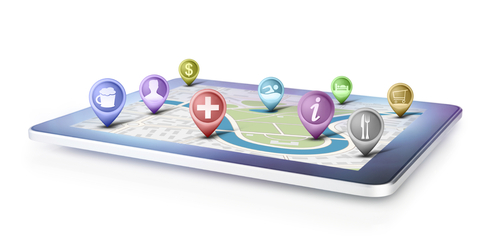
The ability for mobile devices to track and report a person’s location in real time with a reliable degree of accuracy has come into its own. The tendency of consumers to use that feature is increasing in popularity, as well.
According to the Pew Institute, “74% of adult smartphone owners ages 18 and older say they use their phone to get directions or other information based on their current location.”
Use of a geolocation feature is more than a nice-to-have option on a smartphone or tablet — its use has become a routine part of a consumer’s daily life. With U.S. smartphone penetration at 74% and rising, this represents a significant market share of the U.S. buying population.
Geo-Location Tied To Consumer Behavior
What’s especially interesting to marketers is that, aside from seeking directions to specific place, geolocation-enabled activities are most often directly related to consumer-related behavior. Whether it’s looking for a good place to grab a drink or researching a specific product in a retail store, customers have come to rely on their mobile devices as vital sources of information upon which they make an increasing number of decisions about how to spend their time and money.
Trend reports also show an interesting tipping point, consumers are now more likely to “check out” information that’s related to their current location rather than share or “check in” with their current status.
See on marketingland.com

Kenneth Carnesi holds a Juris Doctor degree from New York Law School and a Professional Certificate in International Banking from Harvard Law School. Kenneth Carnesi is the Director of Operations and Government Sales at Anaptyx LLC and sits on the Boards of The Lazarus Organization, Monkeetech LLC and MG Madison Phillips, Inc. Mr. Carnesi has also founded CICG - Carnesi International Consulting Group, a company specializing in strategy consulting to small to mid-size businesses.


 Kenneth Carnesi
Leave a comment